Newsletter · 7 September 2026
Stop hiring your way out of the problem.
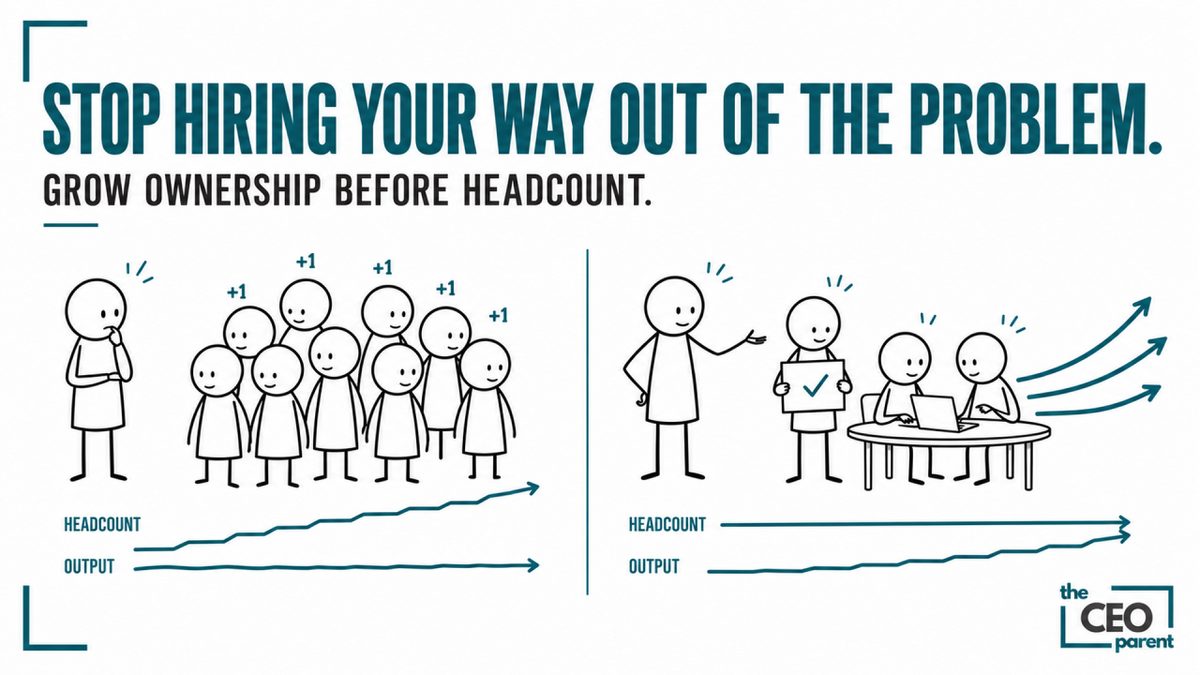
I have sat inside enough scale-ups now, in enough different markets, to recognise the same graph everywhere. Revenue goes up. Headcount goes up right alongside it. Nobody planned it that way. It just happens, one hire at a time, because adding a person always feels like the fastest fix for whatever is on fire this week.
That graph is not growth. It is the same company, just bigger and more expensive to run.
The founders I work with initially almost always default to the same question when revenue climbs: who do I need to hire next. It is the wrong question, or at least the wrong first question. The better one is: what am I actually getting out of the people I already have, and how much further could that go before I add anyone.
Most roles in a scale-up are built for far less value than the person in them could deliver. Nobody sat down and decided, deliberately, what the role should be worth to the business, and then built the ownership and the standard that would let someone actually hit that. So people do what is asked, hand the outcome back, and wait for the next instruction. The ceiling on their output was never them. It was the job description.
Give someone real ownership of an outcome instead of a task list, and their output does not creep up. It jumps. One person doing what used to take two, at a higher standard than either of the two managed alone. Do that role by role and you get what every founder actually wants without saying it out loud: revenue that keeps climbing while the team barely does.
This is also why I push back when a founder tells me the fix is flattening the org chart and putting fifteen or twenty people under one manager. People who have not yet been handed real ownership need more guidance to get there, not less, and a manager stretched across twenty of them cannot give it. You earn that flatter structure through the work above. You do not start there.
So before your next hire, sit down with your three or four biggest roles and ask what each one would need to be worth twice what it delivers today. Usually the answer is not more people underneath it. It is a clearer standard, real decision rights, and someone finally trusted to hit that standard without you checking.
Here is a simple metric to hold yourself to: how long can you go before you actually need the next hire. Not how fast you can grow the team, how long you can delay growing it. Every month you push that date back without anything breaking is a month you spent turning ownership into value instead of cash into headcount. The founders with the healthiest businesses I work with are not the ones hiring fastest. They are the ones who keep being surprised at how long they went without needing to.
Where in your business are you still finishing what someone else should own?